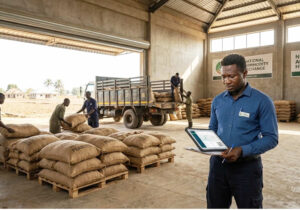
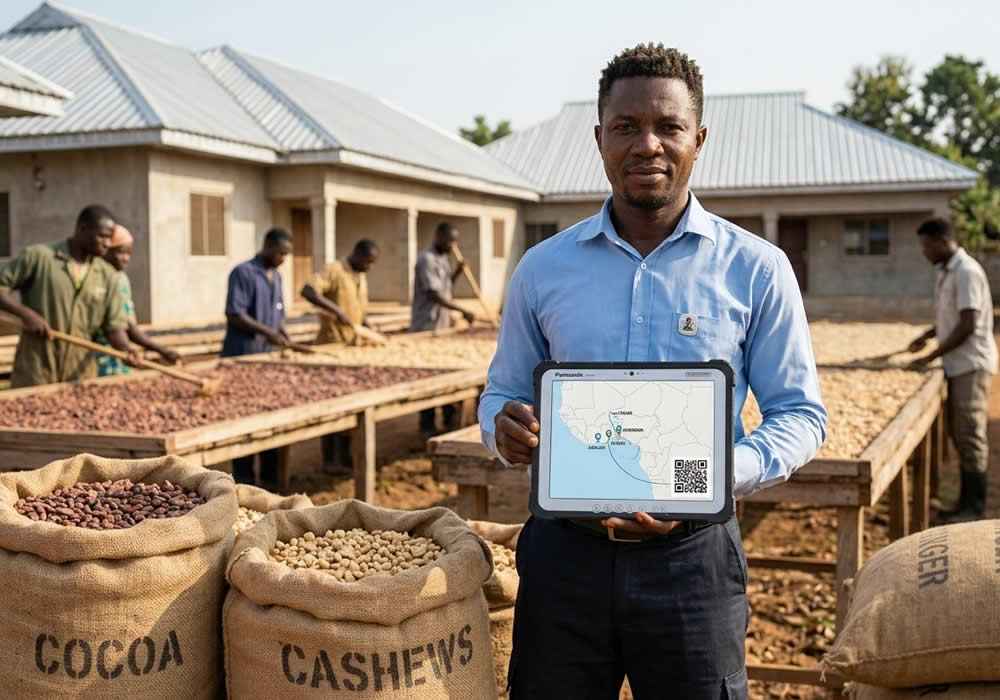
West Africa is one of the world’s important agricultural regions, supplying commodities such as cocoa, cashew, coffee, sesame, shea products, palm oil and other agricultural products to local and international markets.
As global demand for responsibly sourced and high-quality agricultural commodities continues to grow, buyers are increasingly interested in more than just price and volume. They want to know where products come from, how they were produced, who handled them and whether they meet applicable quality, safety and sustainability requirements.
This is where traceability becomes important.
Traceability refers to the ability to track an agricultural commodity through different stages of the supply chain, from its source to its final buyer. For agro-commodity businesses in West Africa, establishing effective traceability can improve transparency, quality control, risk management and buyer confidence.
What Is Traceability in Agro-commodity Trade?
In simple terms, traceability means being able to answer important questions about a commodity throughout its supply chain.
For example:
- Where was the commodity produced?
- Who supplied it?
- When was it harvested or collected?
- Where was it aggregated?
- How was it handled and stored?
- What quality checks were performed?
- Which batch or lot does it belong to?
- Who transported it?
- Where was it ultimately supplied?
The amount of information required can vary depending on the commodity, buyer, destination market and applicable regulations.
A good traceability system connects this information to specific batches or lots, making it easier to follow the movement of commodities from origin to destination.
1. Building Buyer Confidence
International buyers often need confidence that the commodities they purchase meet agreed specifications and sourcing requirements.
A supplier that can provide reliable information about the origin and handling of its products can give buyers greater visibility into the supply chain.
For example, a cocoa buyer may want to know the source of a particular batch, when it was collected, where it was stored and what quality inspections were carried out before shipment.
Providing this information can make commercial transactions more transparent and easier to manage.
2. Improving Quality Control
Traceability can play an important role in maintaining consistent quality.
When commodities are linked to specific farms, suppliers, collection centres, warehouses or batches, quality issues can be investigated more effectively.
Suppose a particular batch of cocoa is found to have excessive moisture after delivery. If the shipment has a reliable traceability record, the supplier can investigate the relevant batch and determine where the problem may have occurred.
Without adequate records, identifying the source of a quality problem can be considerably more difficult.
3. Supporting Food Safety
Agricultural commodities are part of the food supply chain, making safety an important consideration.
Traceability records can help businesses identify where products originated and how they moved through the supply chain.
If a safety or contamination concern arises, traceability can support the investigation and help businesses identify affected batches more efficiently.
This can be particularly important when commodities are supplied across multiple locations or international borders.
4. Meeting Buyer and Market Requirements
Requirements for agricultural commodities can differ between markets and buyers.
Some buyers may require detailed information about the origin, production practices, processing, storage and movement of a commodity.
In certain markets, regulatory requirements may also place greater emphasis on supply-chain information and due diligence.
For West African exporters, understanding the traceability requirements of their target markets can therefore be an important part of preparing for international trade.
5. Supporting Responsible Sourcing
Traceability can also contribute to responsible sourcing practices.
Buyers increasingly want greater visibility into the social, environmental and economic conditions associated with agricultural commodities.
Depending on the commodity and supply chain, responsible sourcing may involve issues such as:
- Environmental protection
- Deforestation risks
- Labour practices
- Farmer livelihoods
- Land use
- Community impacts
- Sustainable production practices
Traceability does not automatically prove that every sourcing requirement has been met. However, it provides the information needed to investigate, monitor and demonstrate aspects of the supply chain.
6. Helping Manage Supply-Chain Risks
Agro-commodity supply chains can face many risks, including poor storage, contamination, quality deterioration, inaccurate documentation and disruptions during transportation.
Traceability helps businesses identify where commodities have been and who handled them.
This creates a clearer supply-chain record and can make it easier to investigate problems when they occur.
For companies dealing with large volumes from multiple suppliers, this visibility can become particularly valuable.
7. Reducing Disputes Between Buyers and Suppliers
Commercial disputes can arise when buyers and suppliers have different expectations about the quality, quantity or origin of a commodity.
Clear records can help establish what happened at different stages of the transaction.
For example, records may show:
- The quantity received from a supplier
- The date of collection
- Quality inspection results
- Warehouse records
- Batch identification
- Transportation information
- Final shipment details
Maintaining accurate documentation does not eliminate disputes, but it can provide useful evidence when questions arise.
8. Creating Better Records for Farmers and Suppliers
Traceability can also benefit producers and suppliers at the beginning of the supply chain.
When farmers and suppliers are properly registered and their deliveries are recorded, businesses can develop better knowledge of their supply base.
Over time, this information can help businesses understand:
- Production volumes
- Seasonal supply patterns
- Quality trends
- Supplier performance
- Collection locations
- Training and support needs
This can contribute to better planning and supply-chain management.
9. Traceability Supports Digital Transformation
Technology is changing the way agro-commodity businesses manage their supply chains.
Instead of relying entirely on paper records, businesses can use digital tools to record supplier information, purchase transactions, quality inspections, warehouse movements and shipment details.
Depending on the size and requirements of the business, traceability may involve relatively simple tools such as spreadsheets and digital forms or more advanced supply-chain management platforms.
The important principle is that records should be accurate, consistent, accessible and connected to identifiable batches or transactions.
10. Traceability in Cocoa Supply Chains
Cocoa provides a good example of why traceability matters in West African agro-commodity trade.
West Africa is a major cocoa-producing region, and cocoa can pass through several stages before reaching a processor or chocolate manufacturer.
A simplified supply chain may include:
Farmer → Local Collector → Aggregator → Warehouse → Exporter → International Buyer → Processor
At each stage, information can potentially be recorded to improve visibility.
For example, a cocoa batch may be associated with its production area, supplier, collection date, quality assessment, warehouse location and shipment reference.
This creates a clearer connection between the physical commodity and its supporting records.
11. Traceability Is More Than Keeping Documents
It is important to understand that traceability is not simply having paperwork.
A strong traceability system connects information to physical products or identifiable lots.
For example, if a warehouse contains several different cocoa batches, records should make it possible to determine which batch came from which supplier and where it was subsequently shipped.
This requires consistent identification, accurate data entry and proper record management.
A system that contains large amounts of information but cannot reliably connect the information to the physical commodity may provide limited traceability.
12. Challenges to Traceability in West Africa
Although traceability offers significant benefits, implementing it can present challenges.
Some businesses and supply chains may face difficulties such as:
- Fragmented agricultural supply chains
- Large numbers of smallholder farmers
- Limited digital infrastructure in some production areas
- Inconsistent record keeping
- Limited access to reliable location data
- Multiple intermediaries
- Cost of implementing digital systems
- Limited technical capacity
- Changes in suppliers and collection points
These challenges mean that traceability systems should be designed according to the realities of the supply chain.
A small agricultural business may not need the same technology as a large multinational exporter.
13. Starting With the Basics
Businesses that are beginning their traceability journey do not necessarily need to implement a complex system immediately.
A practical approach can begin with establishing clear records for:
- Supplier identification
- Commodity origin
- Collection or purchase date
- Quantity received
- Batch or lot number
- Quality inspection
- Storage location
- Transportation details
- Buyer or shipment information
These records can then be progressively improved and digitised as the business grows.
The Future of Agro-commodity Traceability
As international agricultural supply chains become more transparent and data-driven, traceability is likely to become an increasingly important part of agro-commodity trade.
West African businesses that invest in reliable records and transparent supply-chain practices can be better positioned to respond to buyer requirements and changing market expectations.
However, traceability should not be viewed simply as a compliance exercise. It can also be a practical business tool for improving quality management, supplier relationships, inventory control and supply-chain visibility.
Conclusion
Traceability is becoming an increasingly important part of modern agro-commodi