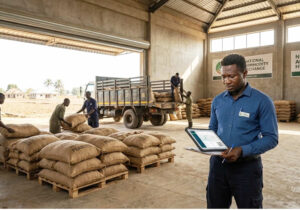
When it comes to cocoa trading and bulk supply, quality is one of the most important factors that determines value, buyer acceptance, and long-term business relationships. Before cocoa beans are purchased, transported, or supplied in large quantities, they typically undergo a series of quality checks to ensure that they meet the required standards.
Quality assessment helps buyers and suppliers identify defective beans, excessive moisture, contamination, poor fermentation, and other conditions that can affect the flavour, processing performance, storage life, and commercial value of cocoa.
For cocoa suppliers, understanding these quality checks is essential for maintaining consistency and meeting the expectations of local and international buyers.
1. Visual Inspection of the Cocoa Beans
The first stage of cocoa quality assessment is often a visual examination. Experienced inspectors look at the general appearance of the beans to identify obvious defects or irregularities.
They may examine:
- Bean size and uniformity
- Colour and appearance
- Presence of mould
- Insect damage
- Flat, broken or germinated beans
- Foreign materials
- Dirt and other contaminants
- Signs of excessive fermentation or poor drying
Good-quality cocoa generally has clean, well-dried beans with a relatively uniform appearance and limited visible defects.
Visual inspection provides an initial indication of whether a batch is suitable for further testing.
2. Moisture Content Testing
Moisture content is a critical factor in cocoa quality because beans with excessive moisture are more susceptible to mould growth and deterioration during storage and transportation.
After fermentation, cocoa beans need to be properly dried to reduce their moisture to an acceptable level.
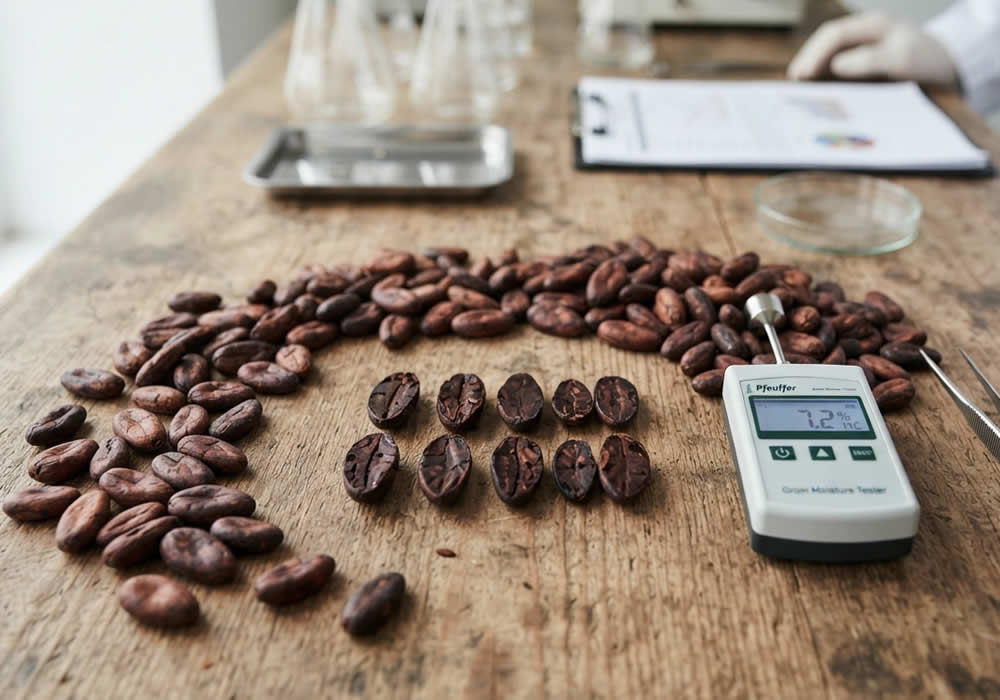
Moisture may be checked using a calibrated moisture meter or other approved testing methods. The acceptable level can depend on the applicable cocoa standard, buyer specification, and destination market.
Excessively wet beans can create serious storage problems, while beans that are improperly dried may develop undesirable characteristics.
3. Cut Test for Fermentation Assessment
One of the most important traditional methods of assessing cocoa quality is the cut test.
During a cut test, a representative sample of beans is cut lengthwise to expose the inside. The internal colour and condition of the beans are then examined.
The test can help identify:
- Well-fermented beans
- Under-fermented or slaty beans
- Over-fermented beans
- Mouldy beans
- Germinated beans
- Other internal defects
The colour and structure of the bean provide useful information about how effectively fermentation took place.
Proper fermentation is particularly important because it contributes significantly to the development of the flavour and aroma characteristics that cocoa processors expect.
4. Checking for Foreign Matter
Cocoa intended for bulk supply should be reasonably free from foreign materials.
During quality inspection, samples may be checked for materials such as:
- Stones
- Sticks
- Leaves
- Pieces of pod
- Soil
- Plastic
- Metal
- Other agricultural or packaging materials
The presence of foreign matter can affect the commercial value of cocoa and may create problems during processing.
Proper harvesting, handling, drying, bagging, and storage practices can significantly reduce contamination.
5. Assessing Bean Defects
Defective beans can negatively affect the quality and processing characteristics of a cocoa shipment.
Quality inspection therefore considers the presence and proportion of defective beans within a representative sample.
Common defects include mouldy beans, insect-damaged beans, germinated beans, flat beans, broken beans, and inadequately fermented beans.
The allowable percentage of defects depends on the relevant quality standard or the buyer’s specification.
For this reason, suppliers should establish quality controls at the farm and collection stages rather than waiting until the final shipment is ready for inspection.
6. Checking Bean Size and Uniformity
Cocoa beans can vary considerably in size. Buyers may assess bean size because it can influence processing characteristics and the commercial specifications of a shipment.
Bean size may be assessed using established grading methods, including counts based on the number of beans contained within a specified weight.
Uniformity is also important because a relatively consistent batch can provide more predictable results during processing.
Depending on the buyer and market, cocoa may be purchased according to specific bean-size or grade requirements.
7. Odour Assessment
The smell of cocoa beans can provide useful information about their condition.
Quality inspectors may check for unusual or undesirable odours that could indicate problems with fermentation, drying, storage, or contamination.
Examples of undesirable odours may include:
- Mouldy smells
- Smoke
- Chemical odours
- Fuel or petroleum smells
- Excessive fermentation odours
Cocoa can absorb odours from its surroundings, so proper storage and transportation conditions are important.
8. Checking for Mould and Storage Damage
Mould is one of the major quality concerns in cocoa.
It can develop when beans are not sufficiently dried or when they are exposed to moisture during storage or transportation.
Inspectors may therefore examine both the external and internal condition of the beans. A cut test can also reveal mould that may not be immediately visible from the outside.
Properly dried cocoa should be stored in clean, dry and well-ventilated conditions, away from sources of moisture and contamination.
9. Sampling Must Be Representative
An important part of cocoa quality assessment is obtaining a representative sample.
Testing only a small portion of a shipment without following an appropriate sampling procedure may not accurately reflect the overall quality of the cocoa.
For bulk supplies, samples should be collected from different portions of the consignment according to the applicable sampling procedure or buyer requirements.
The combined sample can then be mixed and examined to provide a more reliable indication of the quality of the entire lot.
10. Laboratory and Additional Testing
Depending on the buyer, destination, and intended use of the cocoa, additional laboratory tests may be required.
These can include tests related to:
- Pesticide residues
- Heavy metals
- Microbiological quality
- Mycotoxins
- Other contaminants
- Specific buyer or regulatory requirements
Not every cocoa shipment will require every laboratory test. Requirements can vary according to the origin, destination, contract, regulatory framework, and end use.
For international supply, exporters should understand the requirements of the destination market before shipment.
11. Documentation and Traceability
Quality assessment is not limited to the physical condition of the beans. Documentation and traceability are increasingly important in modern cocoa supply chains.
Buyers may require information about:
- Source or origin of the cocoa
- Farmer or supplier information
- Collection location
- Production and harvesting practices
- Batch or lot identification
- Quality inspection results
- Storage and transportation conditions
- Relevant certifications or compliance documentation
Good traceability allows buyers to understand where their cocoa originated and provides greater transparency throughout the supply chain.
12. Final Quality Approval Before Bulk Supply
After the necessary inspections and tests have been completed, the cocoa can be evaluated against the agreed specifications.
The final assessment may consider:
Physical quality:
Appearance, bean size, defects, foreign matter and general condition.
Fermentation:
The proportion of properly fermented beans and the presence of under- or over-fermented beans.
Moisture:
Whether the beans have been adequately dried and are suitable for storage.
Cleanliness:
Whether the cocoa is free from unacceptable contamination and foreign materials.
Odour:
Whether the beans have any undesirable or abnormal smells.
Safety and compliance:
Whether the cocoa meets applicable food safety, regulatory and buyer requirements.
If the cocoa meets the agreed specifications, the lot can proceed to bulk supply.
Why Quality Assessment Matters
Consistent quality is important to everyone involved in the cocoa supply chain.
For suppliers, effective quality control can help reduce rejected shipments, disputes and financial losses.
For buyers and processors, it helps ensure that the cocoa they receive is suitable for their production requirements.
For exporters, maintaining reliable quality standards can strengthen relationships with international buyers and support long-term business opportunities.
Most importantly, quality should not be treated as something that happens only immediately before shipment. It begins at the farm and continues through harvesting, fermentation, drying, storage, transportation and final inspection.
Conclusion
Assessing cocoa quality before bulk supply is a critical part of responsible cocoa trading and supply-chain management. From visual inspection and moisture testing to fermentation assessment, defect identification, sampling and laboratory analysis, each stage provides important information about the condition of the cocoa.
For suppliers looking to build sustainable relationships with buyers, maintaining consistent quality from production through delivery is essential.
A well-controlled quality process not only helps ensure that cocoa meets contractual requirements but also contributes to greater confidence, fewer disputes and a more reliable supply chain.
Quality cocoa begins with proper handling at the source and is confirmed through careful inspection before it reaches the buyer.